
The broken board and rectangular tiles
Consider a normal chessboard with each small square of dimension 1 unit x 1 unit.
We have a lot of rectangular tiles of dimensions 1 unit x 2 units. One rectangular tile covers exactly 2 squares. It can be placed only vertically or horizontally, and not diagonally.

Our task is to cover the entire chessboard.
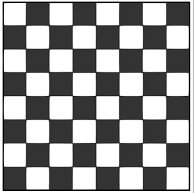
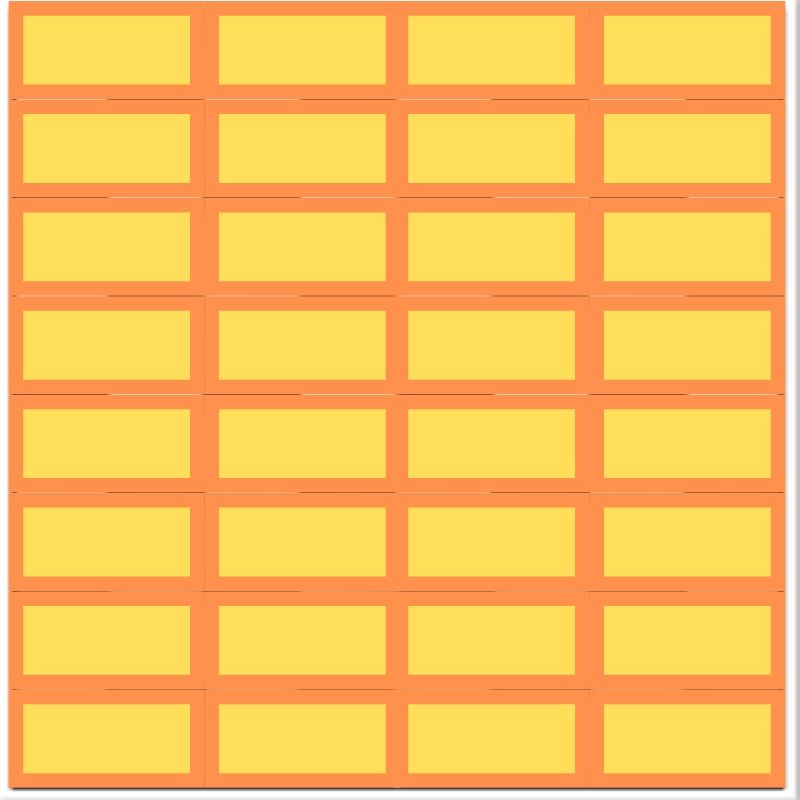
We can easily see that the entire board can be covered by 32 tiles.
Now what if, two small squares from the corners of the the chessboard board are removed. There are 62 squares remaining now.
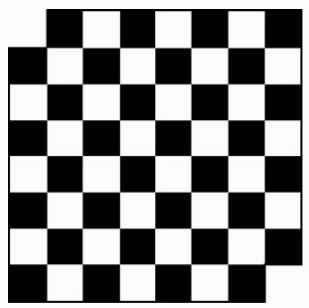
Can you cover these 62 squares using the rectangular tiles now?
Is it possible?
If yes, how can we do it? Else, why not?
Insights occur to a calm and curious mind.
Post your ideas in the comments.
Share the puzzle with teachers, children, friends and all enthusiasts.
Insights, ideas received and discussion about this problem will be posted here on 31st August, 2019.
Check ideas and discussion from previous problems.

What students worked out13
Student 27
No, it cannot be done due to mismatch between number of black and white squares. Each rectangle tile is made of 1 black and 1 white square. However, after the change we would have 30 white and 32 black squares. So we would have only 30 rectangular tiles. And then 2 white squares would remain.
Karanteacher
Great! Taking this further, Can you think of a case when we remove one black and one white square, and still not be able to cover the board?
Student 65
Not possible. Two tiles will always be left out. Each rectangular tile always covers one black and one white tile. You have removed both white tiles. So it is impossible to have 62 tiles to be covered by the rectangular tiles.
Karanteacher
Awesome! Can we remove one black and one white square from any position, and will be able to cover the board?
Student 63
Yes, then we will able to cover the board.
Karanteacher
Okay! How can you be sure that it will always be covered irrespective of the position of the removed tiles (1 black and 1 white)?
Student 16
let bottom-most row be first row & counting is being done upwards;& left-most column be first column & counting is done to the right ;
then any white small square be in m th row & n th column;one of them odd & other even;
then any black small square be in m th row & n th column;both of them either odd or even;
We start from outer enclousure & enter in next to its inner;pairing of say white & black are made,if perfect pairing is there,then there is no removal of white or black small square; if one unpaired black remains,that means one white square is removed from this enclousure. we proceed from unpaired black towards next inner enclousure so the same process; either we get all paired or one unpaired black square;
if full paired,then next removal of black is in this enclousure; if unpaired, we go to next inner enclousure & so on till full pairing is found
Student 62
There will be 31 “pairs” off black and white.. so whichever two(black and white) you pick, you can always cover whole board.
Karanteacher
That’s true according to the number of pairs. But, the question which remains unanswered is whether an arrangement will work out for sure. If yes, we need a clear and simple explanation for that.
Student 16
Not Possible:
32 rectanges initially is broken to 64 small squares consisting of 32 black & 32 white small squares;
Now we have removed two small white squares; we are left with 32 black & 30 white small squares;
Under no circumstances we can create 31 rectangle each consists of one white & one black small squares.
we make round the outermost enclosure of small white & black squares, to black small squres will be left out as unpaired.when we go next inner enclosure of small black & white squares, they paired. so is the case of other inner enclosuresKaranteacher
Interesting way to think about the problem in terms of enclosures.
Student 16
Thanks!
Student 61
Accelerate two of the yellow rectangles close to the speed of light so that from our perspective the yellow rectangles contract to half of their initial length.